
Introduction
Photos are often the very first thing a buyer judges your car on, well before they've read a single word of your description. A handful of blurry, badly lit shots make buyers suspicious there's something you're trying to hide, even when there isn't, while a proper, complete set of photos builds trust and confidence before anyone's even seen the car in person.
This guide walks through exactly which shots to take, how to take them properly, and the small mistakes that quietly put buyers off before they've even asked a question.
Summary:
- A complete, specific set of photos reassures buyers, exterior angles, interior, damage, tyres, and the mileage display all included, not just a few flattering shots.
- Clean the car properly before you shoot a single photo. A dirty car can look like it's hiding something, even when it isn't.
- Location and lighting matter more than most sellers expect. Natural daylight and a plain background beat a fancy setting every time.
- Showing the number plate builds real trust, since it lets a serious buyer run their own history check before they even contact you.
- Photograph your documents alongside the car too, V5C, service history and spare keys, but blur or crop out your home address first.
The Complete Shot List
A properly thorough set of photos covers considerably more ground than most listings bother with. Work through this list and you'll have covered everything a serious buyer wants to see:
- The front interior, shot from outside the car across the dashboard, steering wheel straight and windows either fully up or evenly rolled down
- The instrument display with the ignition on, showing both the mileage and any warning lights
- Each alloy wheel individually, including any scuffs, scratches or kerb damage
- The front of the car from a three-quarter angle
- The front of the car shot dead-on
- A close-up of the tyres showing their remaining tread
- The nearside front corner, at an angle
- A straight side-on shot of the whole car
- The nearside rear corner, at an angle
- The rear of the car shot dead-on
- The boot, completely emptied, showing the parcel shelf and full capacity
- The engine bay, bonnet up, ideally wiped down beforehand
- The offside rear corner, at an angle
- The back seats
- Your V5C, service history and any spare keys, laid out together in one photo, with your address blurred or cropped out
- Honest close-ups of any genuine damage, inside and out, rather than trying to hide it
Clean the Car Properly First
Before you take a single photo, give the car a proper clean, inside and out. A dirty car raises suspicion that marks or damage are being hidden underneath the grime, even when that isn't remotely the case. A few minutes with a vacuum inside makes a noticeable difference to how well-cared-for the whole car looks.
Let it dry completely before you shoot anything though. A wet car can genuinely hide real paint flaws under the water, or create a misleading shine that doesn't reflect how the paintwork actually looks once it's dried off.
Clear Out Your Belongings
Remove bags, rubbish and anything else lying around before you start shooting. Buyers are looking at the car itself, not what you happen to be carrying around in it, and a cluttered interior distracts from exactly what you're trying to show off.
Choose the Right Location
Park somewhere with a plain, open background, an empty corner of a car park or a quiet spot in the countryside both work well. Avoid parking near trees or buildings, since they cast real shadows and reflections that make a car harder to see properly in photos, and give yourself enough space to shoot every angle without obstruction.
Use Decent Equipment, and Shoot in Landscape
A modern smartphone camera is good enough for most sellers, and a proper camera if you've got access to one will do even better. Whatever you use, shoot in landscape orientation rather than portrait, it lets you fit the whole car, or the specific part you're photographing, into frame properly without wasted space around the edges.
A Few Composition Tricks Worth Knowing
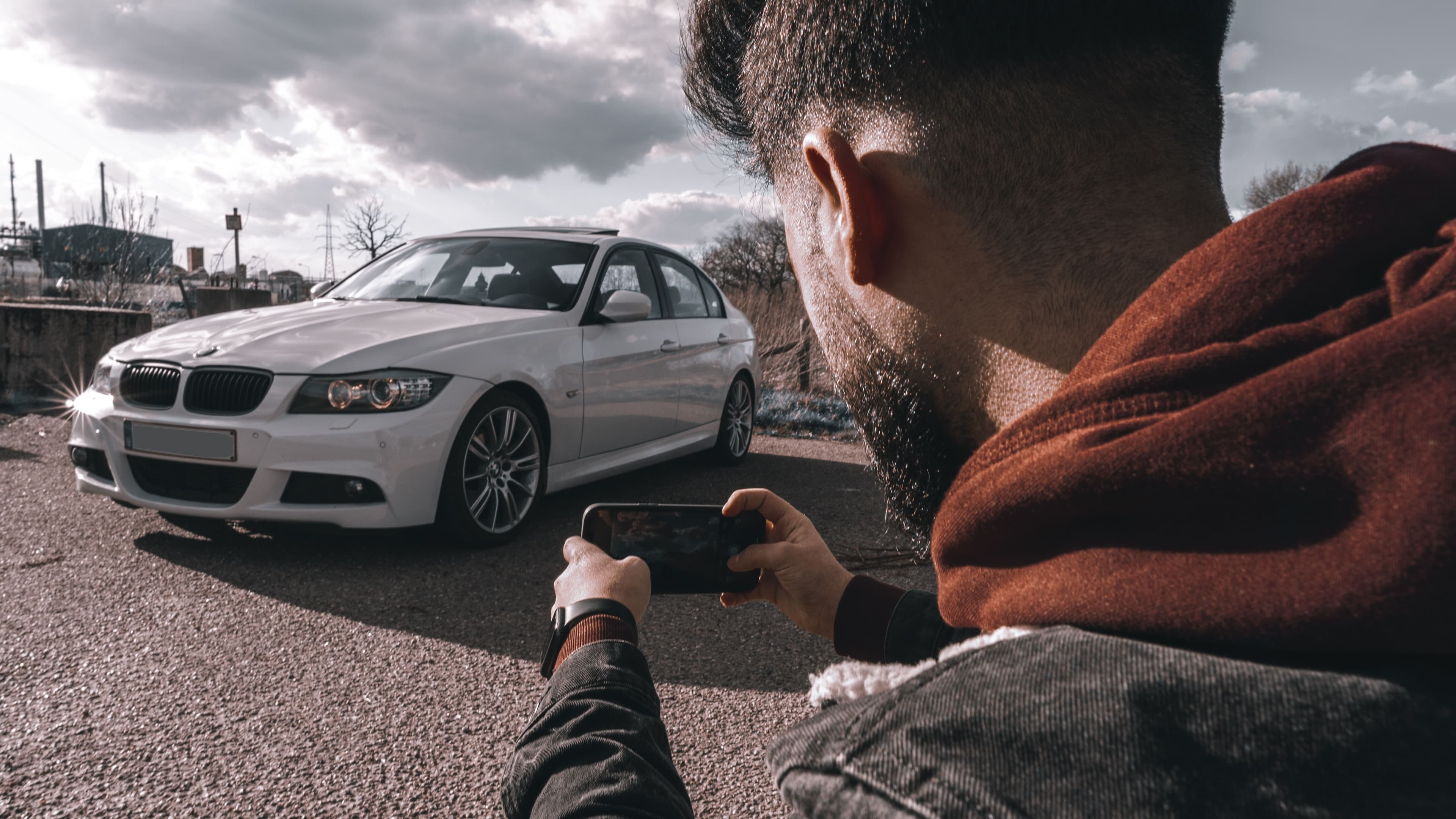
Avoid standing close to the car and using your phone's wide-angle lens, it genuinely distorts the proportions and can create an odd "fisheye" stretching effect. Step back three to four metres instead and use your phone's 2x zoom to bring the car into frame properly.
For exterior shots, crouch down to roughly headlight height rather than shooting from a standing position, giving a genuinely more flattering perspective that shows off the car's silhouette and design lines properly, rather than looking down on it.
Turn on your phone's camera grid lines too, most phones have this built in, and use them to keep the horizon and the car itself straight and level in every shot. For a genuinely nice styling touch on the exterior shots, leave the engine running with the headlights or parking lights on, and turn the front wheels slightly toward the camera.
Get the Lighting Right, and Never Use Flash
Shoot during the day in natural light. A photo taken at night or in poor light using flash obscures parts of the car and looks considerably less appealing to anyone browsing your listing.
Early morning or late afternoon light, often called the "golden hour," genuinely gives the softest, most flattering results, avoid the harsh midday sun if you can. An overcast day works well too though, giving a nice, even light without harsh shadows, so don't feel you need to wait for perfect sunshine.
Whatever the weather, shoot with the sun behind you rather than facing into it. If you've recently fitted new tyres or had any other genuine improvement done, natural daylight is exactly when it's worth showing that off too.
Leave any photo filters alone too. They're designed to flatter an image you don't love, but for a car you're trying to sell honestly, an untouched photo is genuinely what builds trust.
Show the Number Plate
Include at least one photo showing the number plate clearly, letting a serious buyer run their own history check before they even get in touch, and that transparency makes them more confident about proceeding with you specifically.
Skip the Photography Altogether
- Instant Car Valuation: Get an estimate in under 30 seconds from home, no phone call needed.
- We Come to You: We attend your location within 24 hours, inspect, and pay instantly.
- Expert Finance Solutions: Our team settles outstanding finance directly, removing a step most private sellers have to handle themselves.
Conclusion
None of this requires special equipment or skill, just a clean car, decent daylight, a plain background, and the discipline to work through the full shot list rather than a quick handful of flattering angles. That effort shows, and it's often the difference between a listing that gets genuine interest and one that gets scrolled straight past.
If you'd rather skip the photography, the listing, and the waiting entirely, Cardaddys gives you a real valuation and a same-day collection without any of it.
Frequently Asked Questions
How many photos should I actually take when selling my car?
Around 15 to 20 is genuinely worth aiming for, covering every exterior angle, the full interior, the tyres, the mileage display, and any damage, rather than just a handful of flattering shots.
Why does showing the number plate in a photo matter?
It lets a serious buyer run their own history check before contacting you, and that transparency genuinely builds trust before you've even had a conversation.
Should I photograph my service history documents?
Yes, genuinely worth doing. Lay out your V5C, service history and any spare keys together for one photo, but blur or crop out your home address first for your own privacy.
Is it ever okay to use flash for car photos?
Generally not. Flash tends to obscure parts of the car and looks considerably less appealing than a photo taken in natural daylight.
Should I stand close to the car and use my phone's wide-angle lens?
No, genuinely avoid this. Shooting up close with a wide lens distorts the car's proportions, a "fisheye" effect that can make it look oddly stretched. Step back three to four metres and use your phone's 2x zoom instead to bring the car into frame properly.